



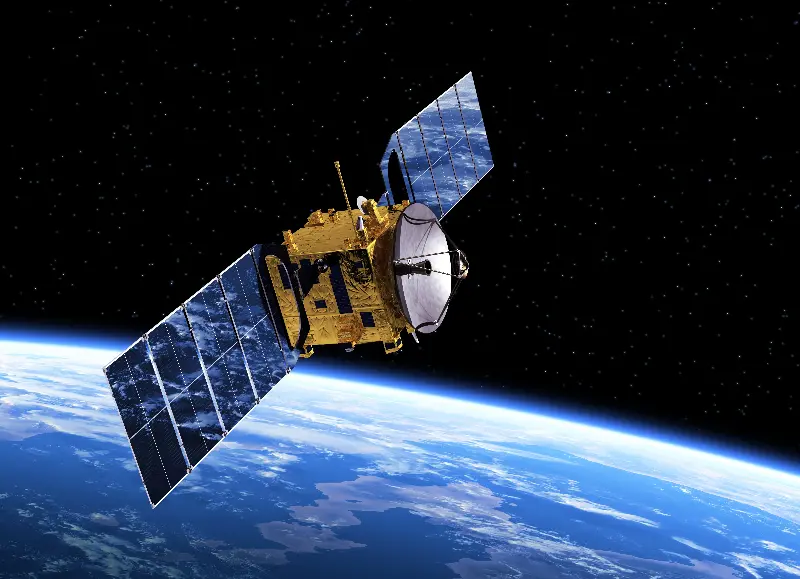
The Royal Astronomical Society (RAS) has issued a stark warning over proposals by Elon Musk’s SpaceX and the California-based startup Reflect Orbital, saying the plans could cause lasting damage to ground‑based astronomy and dramatically alter the night sky for skywatchers.
In comments submitted to U.S. regulators, the RAS said the scale and brightness of the proposed satellite constellations risk overwhelming astronomical observations from Earth. The society, alongside the European Southern Observatory (ESO), has formally opposed both projects in filings to the Federal Communications Commission (FCC), where the companies have sought approval.
The concern centers first on SpaceX’s application to deploy up to 1 million satellites that would operate as orbiting data centers to support artificial intelligence (AI) systems. Brightness estimates cited by astronomers suggest that it would take just thousands of these satellites to be visible to the naked eye at any given time—far exceeding the number of stars typically seen from Earth without optical aid.
“These proposals would not only have a disastrous impact on the science of astronomy, they would also hinder the right of everybody on Earth to enjoy the night sky. That is unacceptable,” Dr. Robert Massey, deputy executive director at the RAS, said in a statement. “The stars above us are a valued part of human heritage—deploying more than one million exceptionally bright satellites would utterly destroy this and permanently scar the natural landscape.
“We hope the FCC wholeheartedly rejects the plans,” Massey added.
Newsweek reached out to SpaceX and Reflect Orbital for more information. Reflect Orbital declined to comment.
Why the RAS Is Concerned
The impact of their joint plans on professional astronomy could be severe, the RAS said.
According to estimates referenced by the astronomical society, images taken by the European Southern Observatory’s Very Large Telescope would, on average, lose around 10 percent of their data because of satellite trails crossing the field of view. Such losses would affect a wide range of research, from studying distant galaxies to tracking near‑Earth objects, and of course, leisurely skywatching too.
Reflect Orbital’s individual proposal has raised a different but equally significant set of concerns.
The company plans to deploy a constellation of mirrors in space designed to reflect sunlight back to Earth during nighttime hours. Each reflected beam, astronomers warn, would be around four times brighter than the full moon. The light would not be confined to a narrow target area, but would also spill into surrounding regions of the sky.
With plans for as many as 50,000 space mirrors, the cumulative effect could be profound. The RAS has warned that the project would make the night sky between three and four times brighter than it is today, fundamentally changing conditions for both amateur and professional observers.
Astronomers say the implications extend beyond scientific research. Artificially brightening the night sky on such a scale could disrupt nocturnal ecosystems that rely on natural darkness to function. Many species use darkness for navigation, feeding, and reproduction, and large‑scale changes to nighttime light levels could trigger cascading ecological effects. Humans, too, could be affected, as excessive nighttime illumination has been linked to impacts on sleep and well‑being.
Both SpaceX and Reflect Orbital have submitted their proposals to the FCC, which regulates satellite communications in the U.S. In response, the RAS and ESO have filed comments urging regulators to consider the long‑term consequences for astronomy and the environment before granting approval. The RAS has also said it supports objections lodged by other astronomical organizations.
While satellite technology has expanded rapidly in recent years, astronomers fear that the unprecedented scale of these latest proposals could mark a turning point. Without stronger safeguards, they argue, the cumulative effect of bright satellites and space‑based mirrors could permanently tarnish humanity’s view of the night sky.
Do you have a tip on a science story that Newsweek should be covering? Do you have a question about astronomy? Let us know via [email protected].