



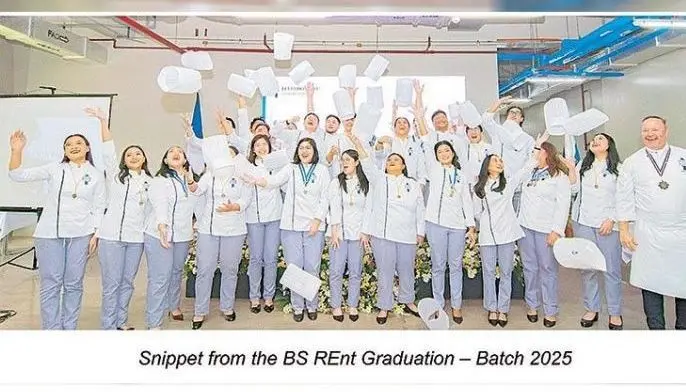
They say the best lessons are learned outside the classroom — and for students enrolled at Ateneo de Manila University’s BS Restaurant Entrepreneurship program, this couldn’t be truer. While the curriculum delivers a strong foundation in both business and culinary theory, it’s the immersive, real-world experiences that truly set the program apart.
Among all the various programs and opportunities, one that really stood out was the Thesis Capstone that seniors undergo during their final semester at Ateneo, a culmination of their journey as BS REnt and John Gokongwei School of Management students.
This extensive capstone project demands both creativity and mastery of theory and practice. Students are tasked with building an entire brand for their chosen concept — from crafting the menu and service script to designing the space itself. The capstone project starts with the selection of the theme or concept that the entire class will use for the duration of the thesis. Groups are split, and three unique concepts were built. Sonata is a multisensory degustation experience where the rich flavors of Italian cuisine harmonize with the elegance and movement of a Sonata, creating a symphony for the senses.
Oryza is a tasting menu that narrates a farmer's journey through the medium of rice, with each dish unfolding a chapter of resilience, tradition, and transformation. And Mauka is a tasting menu inspired by the spirit of Hawaii, where each dish embodies a part of the island’s story, reflecting its vibrant culture and the seamless flow of flavors from the shores to the mountains.
This year, the graduating batch chose Mauka as their selected theme, a Hawaiian-inspired degustation experience that immerses guests in the essence of Hawaiian culture, where storytelling is conveyed through the Hawaiian hula. This was priced at P1,900 per head for five courses, with cocktail or mocktail pairings for each course. The event was not only open to the public but also served to Ateneo’s Board of Trustees and other distinguished guests, making it both a milestone for the students and a proud showcase of the program’s standards.
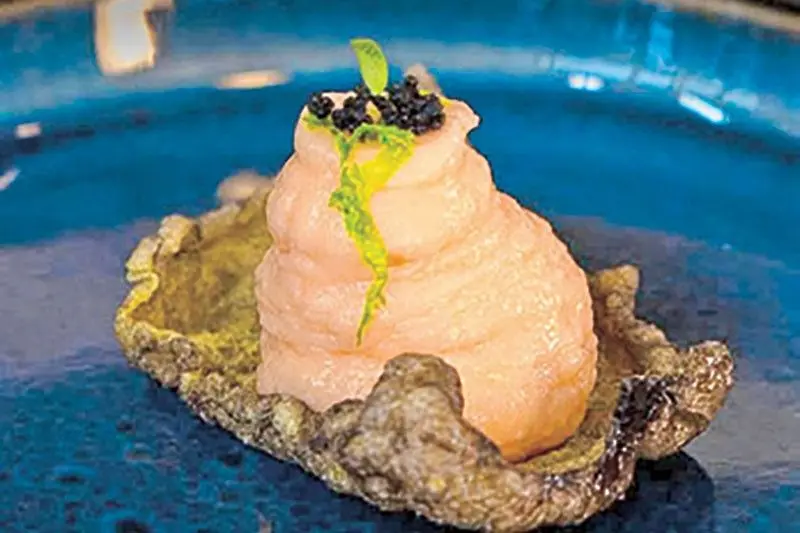
To start off, the first course (amuse bouche) is aptly named the “Tiki.” In Polynesian and Hawaiian culture, a tiki is a carved representation of a person — it is a symbol of humanity, individuality, and self. Salmon is used in three different ways — through the skin, the mousse and the roe, each form symbolizing the part of the whole self.
The second course, Te Va’a (“the vessel”), captures the moment of arrival at the island’s shores. A charred coconut shell tuile, shaped like a canoe, cradles tuna and pineapple poke, accented with togarashi, leeks, sesame sand, and pickled red onions.
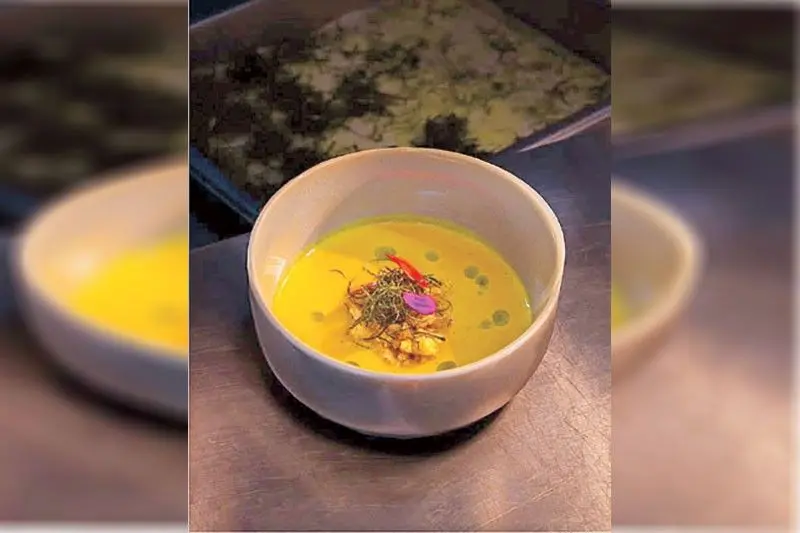
The third course, Aina (“land”), draws from Hawaii’s humble roadside vegetable stalls, honoring trust and community. A silky squash-carrot-leek velouté, topped with banana croutons, crisp fried leeks, edible flowers, and scallion oil, showcases the island’s bounty.
For the main course, Pua (“pork”) reimagines the traditional laulau with pork belly, mushroom duxelle, and perilla-infused crepe, served over purple sweet potato purée with corn-pineapple salsa, red bell pepper sauce, microgreens, chicharrón, and pork rib demi-glace.
The finale, Te Ha (“celebration of life”), transforms banana bread into a layered dessert: rum-flambéed banana compote, banana pudding, matcha crumble, candied macadamias, salted toffee with fish sauce, coconut mousse, and latik crumble — plated like an island surrounded by sea.
A dual-degree powerhouse at its core, the BS Restaurant Entrepreneurship program thrives on this blend of theory and immersion. Students aren’t only taught how to craft exceptional food — they’re trained to design full-scale concepts, manage operations, lead teams, and adapt to real-market demands. From managing their own food stalls at the John Gokongwei Student Enterprise Center (JSEC), to creating dining experiences like Mauka, the course ensures that every graduate leaves with the confidence to build and sustain their own restaurant ventures.
Launched in 2018 under the John Gokongwei School of Management, the BS Restaurant Entrepreneurship program is a unique collaboration with Le Cordon Bleu Manila. Students graduate not just with a degree from Ateneo, but also a diploma from the prestigious Le Cordon Bleu Paris.
This dual-track approach equips students to think like both chefs and entrepreneurs — an essential combination in the competitive food and beverage industry. Moreover, the BS Restaurant Entrepreneurship program has also ventured out into organizing study tours, helping students fully immerse themselves in the culture and cuisine of different countries while also conducting visits at Le Cordon Bleu campuses worldwide.
Truth be told, internships and classroom learning can only take you so far in the F&B industry, but the kind of opportunities offered by the BS REnt program provide a deeper, more practical, and fully immersive perspective. They shape students through real-world challenges, instilling lessons that go beyond theory and preparing them for the true demands of the industry.
***
Be on the look out for more projects and initiatives by the BS Restaurant Entrepreneurship program, by following the Facebook page at REnt JGSOM.
The author is a BS Restaurant Entrepreneurship alumnus, batch 2025.