



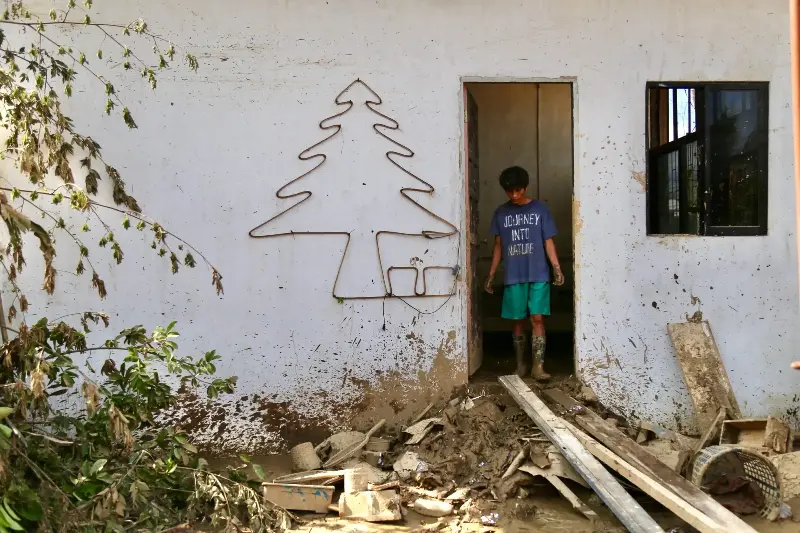
CEBU, Philippines – Joel Patalita, 50, was still in disbelief over how much floodwater had wiped out his village overnight last Tuesday, November 4.
His home, Barangay Cabadiangan, is bordered between the northern Cebu towns of Liloan and Compostela, two of the most badly hit municipalities in Cebu that tallied the highest number of casualties due to the effects of Typhoon Tino.
Based on data from the Cebu Provincial Disaster Risk Reduction and Management Office, as of November 6, Liloan had 36 fatalities while Compostela had 28.
“Wa mi magdahom nga ingun ani kadaghan nga tubig ibuhos ni Tino kay anad na man mi sa bagyo. Katong Bagyong Odette, wala man mi casualty diri,” Patalita told Rappler on Thursday afternoon, November 6.
(We did not expect Tino to pour this much water because we were already used to typhoons. During Typhoon Odette, we didn’t have any casualties here.)
Patalita noted that in two neighboring sitios near his home, there were at least six residents who died because of severe flooding. He pointed out to Rappler that the victims lived in areas near the Cotcot River.
Because of the flooding, Patalita said, some of his neighbors had all of their food supply washed away.
“Total blackout sad mi diri, hasta signal wala. Unya karong mga sunod gabii, mangitngit ni diri kay wa na man. Nangaguba na man among mga flashlight ug mga cellphone,” the resident told Rappler.
(We’re in a total blackout here, we don’t even have any [telco] signal. Then in the next few nights, it’ll be dark here because there’s nothing left. Our flashlights and cellphones are already broken.)
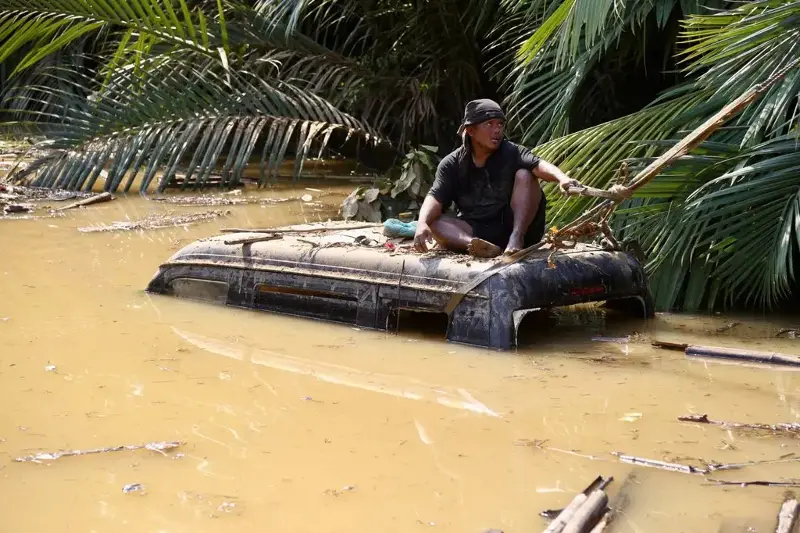
This was the reality being faced by most if not all isolated communities in Compostela, Liloan, and other towns affected by the typhoon. What has to be stressed is that it hasn’t even been more than two months since a magnitude 6.9 earthquake shook Cebu on September 30.
Not fully recovered
On Tuesday, November 4, the typhoon made its landfall in Borbon town, Cebu — only around 27 to 30 kilometers south of Bogo City, which was the earthquake’s epicenter.
Many northern towns were severely affected by the earthquake and also suffered casualties. While parts of Bogo and neighboring towns had gradually restored electricity and communication networks in the quake’s aftermath, other areas going south were still without electricity and network connectivity.
The Visayan Electric Company announced on Thursday noon, November 6, that power restoration efforts in Consolacion, Compostela, Liloan, Cebu City, Talisay City, Minglanilla, Naga City and San Fernando were still ongoing.
Cebu Governor Pamela Baricuatro told reporters on Wednesday, November 5, that search and rescue operations were still in progress and that they have requested reinforcements from the national government for the province’s response teams.
“Maxed out jud atong responders karon (Our responders are maxed out right now),” she said.
The provincial government has its own post-earthquake recovery plan, and Cebu Provincial Disaster Risk Reduction and Management Office (PDRRMO) head Dennis Pastor disclosed during a press conference on October 16 that it would be “a one-year-long plan to address certain issues like shelter, infrastructure, schools, and basic needs.”
As of this writing, the PDRRMO and other concerned agencies are still assessing the extent of the damage caused by Typhoon Tino.
‘Worse’ than Odette
In 2021, around 105 deaths were recorded in the entire island of Cebu after Typhoon Odette (Rai) laid waste to parts of the Visayas and Mindanao.
According to the Cebu provincial government’s count, together with reports from different municipalities, the fatalities caused by Typhoon Tino in the province was already over 120, as of late Thursday evening, November 6.
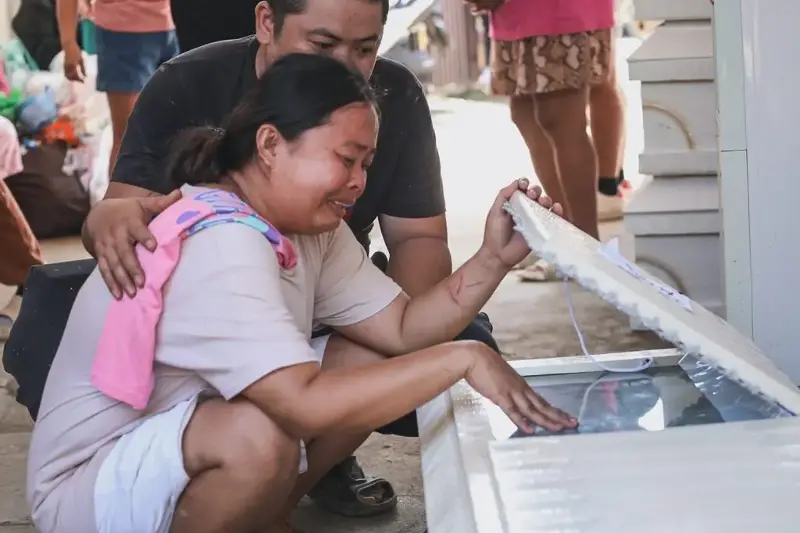
Lolita Malto, a resident from Barangay Dumlog in Talisay City, told Rappler on Wednesday, November 5, that a flash flood, brought by Typhoon Tino, along the Mananga River ripped through more than a hundred houses that stood below the Biasong-Dumlog Bridge.
Out of the hundred, only nine houses survived the flood’s onslaught.
“Arang-arang pa to ang Odette kay katunga pa ang tubig. Times five ang kakusog sa tubig ron,” Malto said.
(Odette was still manageable since the water was still at half. This time, the water’s strength was five times that.)
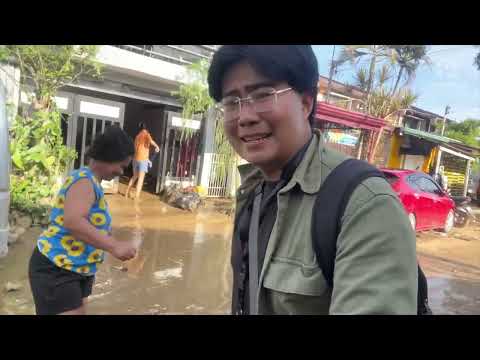
In Compostela, Barangay Cabadiangan resident Jassie Malacad told Rappler that the typhoon caused a flash flood along the channels of the Cotcot and Lusaran rivers, washing out houses and residents from Sitio Mangga.
Malacad shared that the impact of the flood was so severe that residents have opted to leave their homes to seek refuge in other towns. Rappler visited the area and found that the main road to Sitio Mangga had been blocked by a mixture of sand, mud, and other debris left by a landslide.
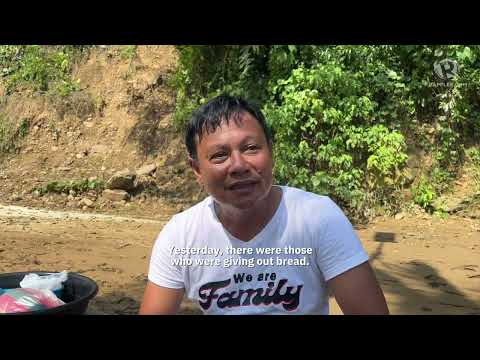
When asked if the residents would still be able to recover from the situation, Malacad replied that it would be difficult to imagine due to the amount of water that had covered the area and the inaccessibility of the village.
“Kung makaahon man sila, matatagalan pa talaga ‘yan (If they do get back on their feet, it will take a really long time),” Malacad said. – Rappler.com