


Getting anywhere with children can be painful. Even a trip to the supermarket is likely to involve “Are we nearly there yet?”, loud singing, sibling arguments and, potentially, an unscheduled nap.
Venture further and the problems multiply. Motion sickness, toileting accidents and boredom-induced tantrums become the norm. Don’t let it ruin your holiday. Here are the dos and don’ts of navigating the longest of journeys peacefully and drama-free.
1. Don’t take the scenic route
Yes, that mountain pass comes with unsurpassed views. But it also involves endless switchbacks guaranteed to elicit vomit from anyone under the age of 12. If people in the car are prone to motion sickness, it might be better to stick to the motorway, or choose a less windy destination altogether.
2. Do factor in loo stops
There’s nothing worse than the dreaded backseat jiggle when you’re stuck in a traffic jam or driving the narrow curves of a coast road. Stopping on either for a quick tinkle could be unsafe – and, in some places, illegal (unscheduled breaks on Germany’s autobahn can result in prosecution). Plan toilet stops before you set out to avoid anyone being caught short – and keep an eye on the satnav so you can take an emergency break pre-pile-up.
3. Don’t let them choose the music
When you’ve listened to The Duck Song on repeat for the length of the Channel Tunnel, it won’t just be the children bringing tears and tantrums to the car. Make a playlist of things that you all enjoy, choose family-friendly stories such as the brilliantly comforting A Bear called Paddington read by Stephen Fry – or give them a device with headphones and Spotify if they’re old enough to manage the music themselves.
4. Don’t leave the tablets too late
If your child needs travel sickness pills to stop them being ill, note that these usually need a bit of time to kick-in before they start to work. For Kwells Kids, it’s 20 to 30 minutes before the journey. And beware of other things that might exacerbate motion sickness, such as too much sun, a lack of fresh air or strong-smelling food in the car.
5. Do keep a change of clothes to hand
Sickness, surprise wees or even just a few errant dribbles of service station ice cream make keeping everything in the suitcase seem like folly. Have a spare set of clothes in the car for emergencies to avoid the dreaded boot rummage.
6. Don’t leave early
That’s when the world and his wife will be leaving, while a smug few start out at lunchtime and arrive in exactly the same amount of time. If you’re determined to beat the traffic, early really has to mean before 7am. In our (very unofficial) study using Google Maps, leaving south east London at 8.59am meant getting to Newquay 5 hours and 37 minutes later. Leaving after lunch at 2pm, just in time for toddler naps and after a sustaining lunch, added just 20 minutes to the journey.
7. Do factor in nap time
Most young children eventually fall asleep in the car. But, unless the journey is during nap or night time, it means they’re likely to be wide awake for much longer than they should be at the other end. Consider tag-teaming the drive late in the evening and transferring kids straight to bed at your destination, or finish an afternoon nap with a stop for fresh air and a runaround to wake them up before continuing onwards.
8. Don’t pick the wrong car seat
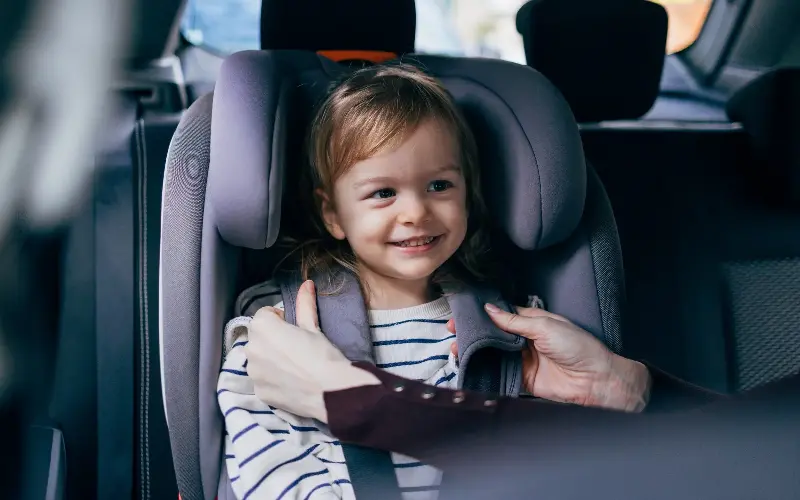
The journey from toddler seat to booster is a rite of passage for some kids (to embark on it, they must weigh more than 15kg by law, while new boosters are only made for those more than 22kg). But, on long journeys, those who have just made the transition may find things uncomfortable due to a lack of support and, potentially, a seat belt that digs in.
If they’re still also within the weight and height restrictions for their previous seat, consider swapping back for a long journey. It’s also worth noting that Which? research found backless boosters unsafe, stating that “booster seats offer very little protection in a crash, particularly if the vehicle is hit from the side”.
9. Don’t ignore are-we-nearly-there-yet boredom
Unless you want to deal with long, tear-stained stretches, have things on hand for when tedium strikes. Games help (see below), but so do snacks and small presents (keep them in the front and dole them out to surprised “ooohs”). Smaller children will love sticker books and toys made especially for the car, such as activity trays and pretend steering wheels (make sure there is an adult in the back to supervise younger kids).
10. Don’t let them get too hot
Irritability or, worse, a bout of sickness can be sparked by a sweltering car journey. Consider shades for the back windows, water bottles that have been kept in the freezer, and car-seat fans if the air conditioning doesn’t quite cut it. If you’re planning a long drive in the heat, it might even be worth considering a Noggle – a device which attaches to an air conditioning vent in the front of the car and directs cool air into the back.